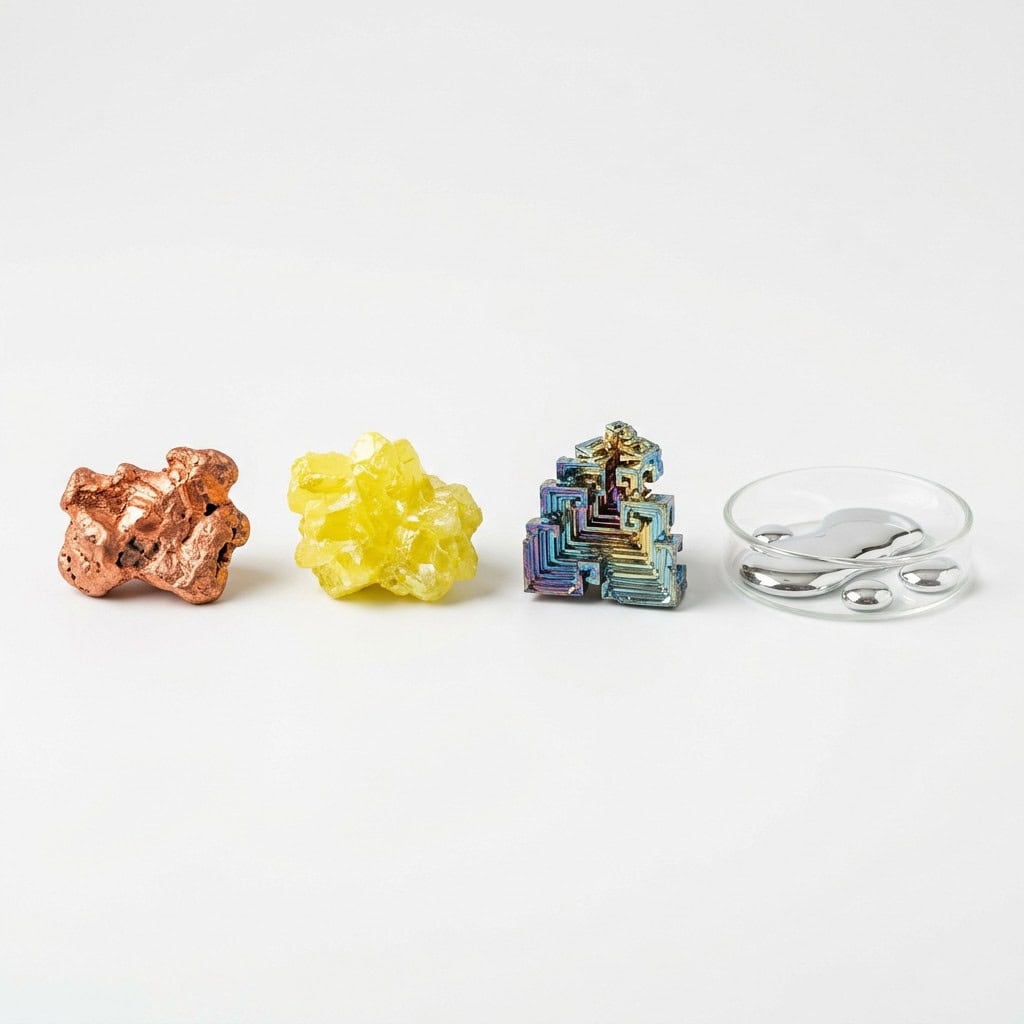
Play now Samples of copper, sulfur, bismuth and mercury on a white background: periodic table quiz
Collection · Periodic Table

Periodic Table Quiz

Twenty quizzes on the periodic table: element symbols, names, families and the story of Mendeleev, with every answer explained.

  • 20 quizzes
  • 1 topic
  • 4 game modes
Play now Sign up free to save your points and progress
Share

Periodic Table quizzes

    What you'll find in Periodic Table

    Topics covered

    Twenty quizzes on the periodic table

    Periodic Table is the collection for anyone who has studied the chemical symbols and wants to see how many stuck: twenty periodic table quizzes on symbols, element names, families and the story of how the table was born. The questions aim right where people slip: sodium is Na, potassium is K, silver is Ag, and “Co” is not “CO”.

    Four ways to play

    Twelve Classic quizzes, where the wrong answers are real symbols of other elements; four Yes or No; two Clues quizzes, where you identify the element one clue at a time; and two Fill-in quizzes on the Latin names behind the symbols, aurum and plumbum.

    Play now

    This is one of our play-now collections: play it all without signing up, and create a free account to save your score. To keep going, try the science quizzes.

    Questions about Periodic Table, with answers

    How do you learn the periodic table by heart?

    You don't need all of it: school tests usually ask for the first twenty elements and the most common metals. Start with the symbols that don't match the English name, about a dozen, such as Na, K, Fe, Cu, Ag, Au, Hg, Pb, Sn, Sb and W, because the rest can be worked out from the name. Then review by column: elements in the same family are easier to remember together.

    What does the atomic number tell you?

    The number of protons in the nucleus of an atom. It is what decides which element it is: an atom with six protons is always carbon. The periodic table lists the elements in order of atomic number.

    What are groups and periods?

    Groups are the eighteen columns and periods are the seven rows. Going down a group, atoms get larger but behave in a similar way; moving across a period, properties change gradually, from metals on the left to nonmetals on the right.

    Which elements are metals and which are nonmetals?

    Most elements are metals, on the left and in the center. The nonmetals, including hydrogen and the noble gases, are a small group at the top right. Between the two, along a staircase line, are the metalloids, such as silicon and germanium.

    Frequently asked questions

    How many quizzes are in Periodic Table?

    Twenty: twelve Classic, four Yes or No, two Clues and two Fill-in, getting harder as you go.

    Is the collection free?

    Yes, and you don't need to sign up: Periodic Table is one of our play-now collections. A free account saves your score.

    Is it right for middle school?

    Yes. The questions cover the symbols and element families that students meet in middle school and first-year high school chemistry, and there are no calculations.

    Why do some symbols come from Latin?

    Because in 1813 the Swedish chemist Jöns Jacob Berzelius proposed using the initials of the Latin names. That is why gold is Au (aurum), silver is Ag (argentum) and lead is Pb (plumbum).

    Ready to play?

    Create your free account: save your points and progress, climb the leaderboard, and your hints top up every month.

    Sign up free